
Scenario 6: Protecting Biodiversity
Biodiversity encompasses the vast array of life forms within a given area, including animals, plants, fungi, and microorganisms such as bacteria, all of which constitute the foundation of our natural world. These species and organisms interact within ecosystems, forming an intricate, interdependent web that sustains ecological balance and supports life on Earth. Biodiversity underpins essential services vital to human survival, including food production, clean water provision, medicinal resources, and shelter.
However, escalating human activities are exerting unprecedented pressure on the planet, disrupting ecosystem equilibrium and accelerating biodiversity loss. Key threats include overfishing of oceans, widespread deforestation, pollution of water sources, and broader environmental degradation. These impacts extend from remote wilderness areas to local communities. Climate change exacerbates these stressors, further compromising nature and human well-being. According to the WWF Living Planet Report 2024, monitored vertebrate wildlife populations (encompassing mammals, birds, reptiles, amphibians, and fish) have declined by an average of 73% since 1970.
The European Union actively addresses these challenges through robust policy frameworks. The EU Biodiversity Strategy for 2030, a core component of the European Green Deal, commits to halting and reversing biodiversity loss by establishing protected areas covering at least 30% of land and sea, strictly protecting high-value zones, and implementing comprehensive restoration measures. Complementing this, the Nature Restoration Law (Regulation (EU) 2024/1991), which entered into force in August 2024, introduces binding targets to restore at least 20% of degraded land and sea areas by 2030, progressing toward full ecosystem recovery by 2050. Member States are required to submit National Restoration Plans by mid-2026 to operationalize these objectives.
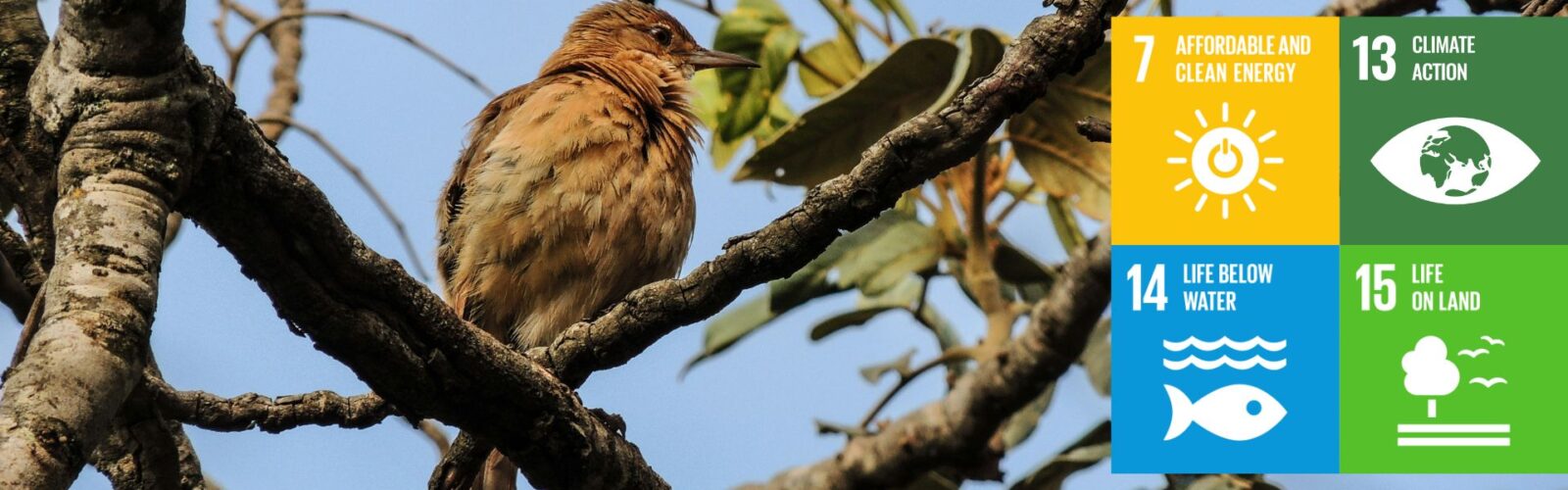
Linked to SDGs:
SDG 7: Affordable and Clean Energy
SDG 13: Climate Action
SDG 14: Life Below Water
GOAL 15: Life on Land
Institutions Involved:
- VET providers: Leading the project and providing academic support.
- Local Government: Partnering to provide real-world challenges and data.
- Stakeholders: Offering insights and practical challenges related to biodiversity.
- Others: environmental NGOs, intergovernmental agencies and organisations; biodiversity specialists; financial institutions, research institutions, private for profit
Challenge Providers: Companies, public bodies, NGOs and civil society organizations committed with the protection of biodiversity
Number of Learners: 20-30 students divided into 4-5 teams of 6 members each.
Learners: VET students from various disciplines including environmental and digital sciences.
Duration: 4-5 months
To develop and implement digital solutions for monitoring/protecting biodiversity through a collaborative project with entities committed with the protection of biodiversity.
Protecting biodiversity requires a multifaceted approach involving individual actions, community engagement, and strong government policies. By working together, we can safeguard the rich tapestry of life on Earth for present and future generations. The following objectives are foreseen for this scenario:
- Identifying challenges and opportunities regarding biodiversity protection at local scale.
- Developing innovative and practical solutions to improve biodiversity tailored to the local context and needs
- Collaborating with stakeholders to implement and evaluate the proposed solutions
- Raising awareness about global/local biodiversity loss among the local community.
- Structure of the Challenging Case:
- How biodiversity is protected in the local context by public and private entities?
- What are the current challenges faced by the local community in terms of protecting biodiversity?
- How can technology be leveraged to improve the efficiency of measures for biodiversity protection?
- Guiding Questions:
- What are the key factors contributing to reduce biodiversity in the local context?
- How can alternative solutions contribute to improve biodiversity at local scale?
- What are the best practices from other projects that can be applied to the local project?
- Problems to be Solved:
- Current threats on biodiversity imposed human activities.
- Inefficiencies in current biodiversity protection measures.
- Lack of awareness and engagement from the community regarding biodiversity protection.
- Statement of Local Issues:
- The municipalities and regional authorities face challenges in protecting biodiversity and improving the monitoring of most threatened species their region. The involvement of the community and local institutions is crucial to address these issues effectively.
The following plan is necessary to effectively achieve the desire innovative solution to the problem addressed:
- Local context Analysis: Biodiversity at the local context should be assessed with input data from different sources (environmental public bodies, research, NGOs, etc.). Learners must connect to their local public authorities and identify their specific needs. They must study their local context, including: 1) description of the challenges regarding biodiversity protection in their local context, 2) analysis of the legal framework that regulates biodiversity protection in their region and 3) identification of current mitigation practices for protecting biodiversity in the selected area. Moreover, by analyzing the ecosystems associated to the local context, including main threatened species, students will establish a foundation for understanding the existing system in terms of biodiversity, gaining awareness on the challenge.
- Stakeholder Engagement: Parallel to local context analysis, fostering strong connections with the community is paramount. Building partnerships with local government, environmental NGOs, researchers and other stakeholders will create a collaborative environment for idea sharing and solution development. Moreover, incorporating challenge providers feedback into the solution development process ensures that the final outcomes are aligned with the community’s aspirations. Identifying the biodiversity challenges faced by the challenge provider at local level (species/groups of fauna and/or flora) and assessing the protocols and tools that are currently put in place for protecting biodiversity will serve as a starting point to design the solutions.
- Innovative Solution Development: The heart of the project lies in innovation. Learners will engage in brainstorming sessions and design thinking exercises to generate a wealth of creative ideas. These concepts will be transformed into tangible solutions through prototyping and small-scale testing of their biodiversity monitoring/protection systems. A keen focus on technology will drive the exploration of smart solutions for biodiversity protection.
- Technology Integration and Eco-Digitalisation: Digital solutions are at the core of modern sustainable biodiversity monitoring techniques. Students will delve into the development of innovative digital solutions and applications to address biodiversity protection challenges. The solution should be a new tool to improve current tools/measures for the protection of biodiversity. This may include: 1) Use of Information and Communication Technologies (ICT) and the Internet of Things (IoT) for the monitoring of threatened species, 2) Look for more efficient materials for nest boxes, 3) Design a device that allows the recording and registration of bird songs, 4) Community-based monitoring: citizen science for biodiversity monitoring, among others, 5) Digital solutions to increase awareness on biodiversity protection, 6) Tools to identify invasive alien species, etc.
- Testing and Refining Through Action: Once promising solutions emerge, the project transitions from concept to reality through pilot projects. These small-scale implementations allow students to test the functionality, usability, and effectiveness of their ideas in a real-world setting. Gathering feedback from stakeholders, including local authorities, environmental advisors and partner organizations, is crucial during this phase. This feedback loop enables students to refine their solutions, addressing unforeseen issues and optimizing functionalities. By iteratively testing and refining through pilot projects, students can ensure the final solutions are practical, user-friendly, and have a significant impact on the local biodiversity.
By combining these strategic approaches, learners will not only develop innovative solutions but also cultivate the skills and knowledge necessary to become leaders in biodiversity protection. Simultaneously, community engagement and education initiatives will be undertaken to raise awareness, promote behavior change, and build a supportive environment for biodiversity protection.
- Timeframes of Activities by months:
- Month 1-2: Research and data collection.
- Training on the scenario by leaders of Scenario
- Contact with challenge providers and local communities
- Identification of local needs and detailed description of the local challenge
- Month 3: Development of solutions and prototypes.
- Month 1-2: Research and data collection.
- State-of-the-art on current solutions
- Selection of the most suitable solution for the local needs
- Develop the innovative idea to adapt the solution to the local challenge
- Month 4: Testing and refinement of solutions.
- Month 5: Presentation and implementation of final solutions.
Immediate Outcomes:
- Knowledge on local biodiversity and their challenges
- Knowledge about the regulatory framework on biodiversity at local/regional/international scales
- Knowledge on local vulnerable and threatened species
- Increased awareness and engagement regarding biodiversity.
Long-Term Outcomes:
- Improved biodiversity in the region.
- Strengthened collaboration within the local community to address current and future challenges regarding protection of biodiversity.
Innovative Aspects:
- Use of smart technology for biodiversity monitoring/protection
- Community engagement and awareness campaigns for protecting biodiversity at local scale (citizen science).
- Owners of the Result:
- Challenge provider committed with biodiversity protection
- VET providers
- Local authority
- Related Outcomes:
- Better understanding on the impacts of human activities on biodiversity
- Improved efficiency of biodiversity protection systems.
- Enhanced collaboration within the local community towards protecting biodiversity.
- Increased awareness on biodiversity protection by the community.
- Environmental Changes:
- Reduced impacts of human activities in biodiversity.
- Improved local biodiversity.
- More resilient ecosystems.
The digital solution will allow main stakeholders of the scenario to improve their current practices for protecting most vulnerable species at local scale.
This CBL project is designed to equip students with a valuable set of competencies that will benefit them in their academic and professional careers. Here’s a breakdown of the key competencies students can expect to develop:
Technical Skills:
- Biodiversity: Students will develop new skills to protect biodiversity and improve their knowledge on biodiversity in their local context.
- Digital Literacy: Students will gain proficiency in navigating the digital landscape and applying innovative tools.
- Project Management: Participating in a collaborative project fosters project management skills such as planning, organization, task delegation, and meeting deadlines. Students will learn to manage their time effectively and collaborate productively within a team.
Problem-Solving and Critical Thinking:
- Creative Problem-Solving: Students will be challenged to develop innovative solutions to complex challenges. Brainstorming techniques, design thinking methodologies, and user-centered approaches will be employed to encourage creative thinking and the generation of effective solutions.
- Critical Evaluation: Throughout the project, students will be required to critically evaluate proposed solutions, consider their feasibility, and assess their potential impact on sustainability and the community.
Communication and Collaboration:
- Effective Communication: Students will need to communicate effectively with diverse audiences, including peers, stakeholders and the general public. They will hone their written, verbal, and visual communication skills.
- Teamwork and Collaboration: The project emphasizes collaborative learning, requiring students to work effectively within a team. They will learn to share ideas, manage conflict, and contribute to achieving common goals.
- Stakeholder Engagement: The success of the project hinges on productive relationships with stakeholders. Students will develop skills in stakeholder identification, communication, and collaboration, understanding the importance of involving various players in the solution development process.
This comprehensive set of competencies will empower students to become future leaders in biodiversity protection. They will be equipped to tackle complex problems, innovate solutions, collaborate effectively, and contribute to a more sustainable future.
- General OERs
This category offers general educational resources on biodiversity and conservation, ideal for introducing fundamental concepts in Scenario 6. It includes challenge-based lessons that integrate engineering, design thinking, and environmental awareness, fostering the development of skills in VET students to identify local threats and propose innovative solutions aligned with European policies such as the Biodiversity Strategy 2030 and the European Green Deal.
1.1. Introduction to Goal 15 – Life on Land Micro:bit (English): Educational activities using Micro:bit for protecting and restoring nature, aligned with SDG 15.
1.2. Endangered Animals and Number Sense Lesson (English): Lesson integrating math with awareness of endangered species.
1.3. Biology Lesson: Design Thinking Solutions for Birds (English): Design-based activities for bird conservation solutions.
1.4. Extinction Prevention via Engineering (English): Engineering lesson on preventing species extinction.
1.5. SEO/BirdLife – Sociedad Española de Ornitología (Spanish): Organization website with bird conservation resources.
1.6. Ciencias Educación Secundaria y FP | Ambientech (Spanish): Well-explained science resources.
1.7. Materiales didácticos sobre biodiversidad (Spanish): Educational materials on biodiversity.
1.8. Recursos educativos en línea sobre Educación para el Desarrollo Sostenible (Spanish): Sustainable development education resources.
1.9. Linee guida per la valutazione di impatto ambientale degli impianti eolici (2012) (Italian): Guidelines for wind plant environmental impact.
1.10. Biodiversity4All (Portuguese): Portuguese citizen science platform for biodiversity recording.
1.11. Flora-On (Portuguese): Educational portal on Portuguese flora and biodiversity.
1.12. ISPRA – Biodiversità (Italian): Resources from the Italian Institute for Environmental Protection and Research on biodiversity.
1.13. Portale della Biodiversità (Italian): Italian educational portal on biodiversity.
1.14. Biodiversität in Deutschland (BMU) (German): Official German resources on biodiversity and conservation.
1.15. Naturschutz und Biodiversität (BUND) (German): Educational materials from the German environmental organization BUND.
- OERs on Biodiversity Monitoring (e.g., Citizen Science Apps, Camera Traps, Acoustic Tools)
This category compiles open educational resources dedicated to biodiversity monitoring, with an emphasis on tracking birds, pollinators, and diverse species using innovative approaches such as citizen science, collaborative platforms, technological tools (cameras in nests, acoustic recordings, smart devices, and mobile apps), and educational courses. These materials support VET challenges in Scenario 6, facilitating the integration of real data, the use of digital technologies, and community collaboration for effective and sustainable monitoring in local and European contexts.
2.1. Birds – BirdLife International (English): Comprehensive resources on global bird conservation and monitoring.
2.2. About us | EBCC (English): Organization supporting bird monitoring and census programs across Europe.
2.3. SMART NEST BOX Project (English): Research project on advanced nest boxes for bird monitoring.
2.4. Nest Box Live | Bird Nest Box with Camera (English): Platform for live streaming nest box observations.
2.5. Birdfy Nest – Smart Wooden Birdhouse with Camera (English): Smart bird nest monitoring device and app.
2.6. xeno-canto :: Sharing wildlife sounds from around the world (English): Global archive of bird sounds for identification and biodiversity tracking.
2.7. Biomonitoring, monitoring by bees | BeeOdiversity (English): Biomonitoring solutions for pollinators using technology.
2.8. Citizen science and global biodiversity (English): Free course on biodiversity and citizen science platforms like iNaturalist.
2.9. Teacher’s Guide · iNaturalist (English): Guidelines for using the app in education for species recording.
2.10. Camera Trapping for Conservation | WILDLABS (English): Course on camera trap use.
2.11. Avefy -¿Qué ave está cantando? (Spanish): Mobile app for bird monitoring and observation.
2.12. Merlin Bird ID App (English/Multilingual): App for bird identification and monitoring using sound and photo ID.
2.13. Natusfera (Spanish iNaturalist) (Spanish): Citizen science platform for biodiversity recording and monitoring.
2.14. FrogID Project Resources (English): Educational tools and app for acoustic monitoring of frogs.
2.15. eBird Platform (Multilingual): Global citizen science platform for bird monitoring and data submission.
2.16. BioDiversity4All (Portuguese): Portuguese platform for citizen monitoring of biodiversity.
2.17. Observation.org (Portuguese version) (Portuguese/Multilingual): Global monitoring platform with local support.
2.18. Portale Nazionale Biodiversità (Italian): Resources for biodiversity monitoring in Italy.
2.19. Citizen Science Italia (Italian): Citizen science monitoring projects.
2.20. Biodiversitätsmonitoring Deutschland (German): Official German biodiversity monitoring program.
2.21. Naturgucker.de (German): Citizen science platform for nature observations.
- OERs on Urban Biodiversity Enhancement (e.g., Pollinator Gardens, Green Corridors, Rooftop Habitats)
This category explores strategies for improving biodiversity in urban environments, such as pollinator gardens, green corridors, and rooftop habitats. These resources are particularly useful for VET projects that promote community green infrastructure, fostering ecological connectivity and local participation in creating resilient and sustainable spaces.
3.1. How to enhance, restore and protect biodiversity in your city (English): Guide with urban actions.
3.2. Cultivating Habitat Lesson Plan (English): Lessons for designing pollinator gardens.
3.3. Biomonitoring, monitoring by bees | BeeOdiversity (English): Applicable for urban pollinator tracking and enhancement.
3.4. Urban Pollinators Poster (English): Materials on urban habitats.
3.5. Promoting Biodiversity Through Urban Greenspaces (English): Design lesson for urban spaces.
3.6. Bee Smart School Garden Kit (English): Toolkit for school gardens.
3.7. Jardines para polinizadores urbanos (Spanish): Guide on urban gardens for pollinators.
3.8. Biodiversidad urbana con huertos (Spanish): Resources for urban orchards and gardens.
3.9. Biodiversidade urbana em Portugal (Portuguese): Resources from the Institute for Nature Conservation (adapted to urban contexts).
3.10. Jardins para polinizadores (Portugal) (Portuguese): Projects on gardens in citizen platforms.
3.11. Biodiversità urbana e giardini (Italian): ISPRA resources on urban biodiversity.
3.12. Pollinatori in città (Italian): LIPU guides for urban pollinators.
3.13. Stadtbiodiversität (Deutschland) (German): Federal resources on urban biodiversity.
3.14. Insektenfreundliche Gärten (German): NABU guide for insect-friendly gardens.
- OERs on Habitat Restoration and Reforestation Toolkits
This category includes guides and toolkits for habitat restoration and reforestation, focusing on practical and scalable approaches. They support VET activities aimed at restoring degraded ecosystems, promoting the use of native species and sustainable techniques to improve resilience and ecosystem services.
4.1. Reforestation Guide (English): Step-by-step planting guide.
4.2. Oxbow Restoration Toolkit (English): Riverine habitat guide.
4.3. Restoration Education Guide (English): School restoration lessons.
4.4. Biodiversity Guidelines for Forest Landscape Restoration (IUCN) (English): Native species focus.
4.5. Restauración de bosques (WWF España) (Spanish): WWF guide for ecological restoration.
4.6. Manual de restauración ecológica (Spanish): Practical WWF manual.
4.7. Reflorestação em Portugal (Portuguese): Resources from the Portuguese Institute for Nature Conservation.
4.8. Projetos de restauração (Portuguese): Educational restoration projects.
4.9. Restauro ecologico (ISPRA) (Italian): Italian guides for ecological restoration.
4.10. Linee guida reforestazione (Italian): Regional documents on reforestation.
4.11. Waldrestaurierung (Deutschland) (German): Federal German resources.
4.12. Renaturierung Leitfaden (German): Guides from the Federal Agency for Nature Conservation.
- OERs on Nature-Based Solutions (NBS) for Biodiversity Conservation
This category brings together resources on nature-based solutions (NBS), which leverage ecosystems to address environmental challenges while benefiting biodiversity and human well-being. They are ideal for VET challenges that integrate ecological restoration, climate change adaptation, and inclusive participation, aligned with global frameworks such as the UNDP and the IUCN.
5.1. Learning for Nature – Plataforma de e-learning sobre NBS (English/Spanish/French): Free courses on nature-based solutions for sustainable development and biodiversity conservation.
5.2. Nature-based Solutions for Sustainable Development (Curso UNDP) (English): Online course on implementing NBS for social and environmental challenges.
5.3. Teaching Tools About Biodiversity (WWF Toolkit) (English): Educational guide with activities on biodiversity and nature-based solutions.
5.4. Eco-Schools U.S. – National Wildlife Federation (English): Program with resources for school projects on NBS and habitat restoration.
5.5. Materiales didácticos sobre biodiversidad (MITECO) (Spanish): Spanish educational resources on biodiversity and natural approaches to conservation.
5.6. Soluciones basadas en la naturaleza (Ambientech) (Spanish): Explanations and educational examples of NBS applied to school and urban environments.
5.7. IUCN Global Standard for Nature-based Solutions (English): Resources and standards for nature-based education and NBS.
5.8. Soluciones basadas en la naturaleza (MITECO) (Spanish): Official page with educational resources.
5.9. Soluciones basadas en la naturaleza (Climate-ADAPT) (Spanish): Translated European guide.
5.10. Soluções baseadas na natureza (Portugal) (Portuguese): Resources from ICNF.
5.11. Projetos NbS Portugal (Portuguese): Educational examples.
5.12. Soluzioni basate sulla natura (ISPRA) (Italian): Italian resources.
5.13. NbS in Italia (Italian): IUCN Italy.
5.14. Naturnahe Lösungen (Deutschland) (German): BMU resources.
5.15. Naturbasierte Lösungen (BfN) (German): Guides from the Federal Agency.
- OERs on Invasive Species Management and Prevention (including Citizen Science)
This category addresses the management and prevention of invasive species through citizen science, monitoring, and prevention, ideal for VET challenges involving digital tools and community participation.
6.1. InvaPlant – Detección de flora invasora (MITECO/iNaturalist) (Spanish): Citizen science initiative for monitoring invasive plants in Spain.
6.2. ¡Cuidado, invasoras! Cuaderno de actividades (LIFE INVASAQUA) (Spanish): Educational workbook with activities on aquatic invasive species.
6.3. Citizen Science and Invasive Species (Open University) (English): Free course on citizen science applied to biodiversity and invasives.
6.4. MedMIS – Seguimiento de especies marinas invasoras (Multilingual): Platform for citizen reporting of marine invasives in the Mediterranean.
6.5. Teaching About Invasive Species (Green Teacher Resources) (English): Guides for education on invasive management with citizen focus.
6.6. Ojo a las invasoras – Recursos educativos (IMEDEA CSIC-UIB) (Spanish): Educational materials on marine invasives in the Mediterranean.
6.7. Educators Resources on Invasive Species (USGS/National Invasive Species Center) (English): Lessons and toolkits for teaching prevention and management of invasives.
6.8. Especies exóticas invasoras (MITECO) (Spanish): Official and educational resources.
6.9. Guía didáctica especies invasoras (Spanish): Trainer manual.
6.10. Espécies invasoras Portugal (Portuguese): National platform for invasive species management.
6.11. Recursos educativos invasoras PT (Portuguese): ICNF guides.
6.12. Specie aliene invasive (Italia) (Italian): ISPRA resources.
6.13. Progetti citizen science invasoras (Italian): Italian Ministry projects.
6.14. Invasive Arten Deutschland (German): Federal portal on invasive species.
6.15. Neobiota und Management (German): UBA resources.
- Learn more on biodiversity loss: https://ec.europa.eu/environment/stories/nature-needs-you/
- European Commission: Directorate-General for Environment, EU biodiversity strategy for 2030 – Bringing nature back into our lives, Publications Office of the European Union, 2021, https://data.europa.eu/doi/10.2779/677548.
- EU Nature Restoration Law, Regulation 2024/1991
- Kunming-Montreal Global Biodiversity Framework